
Shippit is shipping software. A 3PL is a warehouse service. They solve adjacent but different problems. Confusing them leads brands to buy the wrong tool at the wrong stage and spend months wondering why the operation still feels broken.
Key points
- Shippit is a carrier aggregator and shipping management layer: it compares rates, prints labels, and tracks parcels across multiple carriers
- A 3PL is a warehouse operation: it receipts inventory, stores it, picks orders, packs parcels, and hands them to a carrier
- Brands still packing their own orders can benefit from Shippit alongside self-fulfilment, because the bottleneck at that scale is carrier rate optimisation, not warehousing
- Brands that have outgrown self-fulfilment need a 3PL. Adding Shippit on top does not remove the physical work of packing, which is the actual constraint
What Shippit actually is
Shippit is an Australian shipping software platform. It sits between your Shopify store and the carriers (Australia Post, CouriersPlease, StarTrack, Aramex, and others) and does three things: it compares the live rate from each carrier for a given parcel and destination, it generates the shipping label, and it provides tracking back to the customer through branded tracking emails and a tracking page.
Shippit does not physically touch your inventory. Your stock still lives wherever you are holding it: a garage, a spare room, a small leased space, or your own office. Orders still need to be physically picked, packed into a box or satchel, and handed to the carrier. Shippit makes the label generation and carrier selection part of that process cheaper and faster. It does not eliminate the work of packing.
The value Shippit provides is real: lower shipping cost through rate comparison, consistent tracking experience across carriers, and a single dashboard for shipping analytics. For a brand still running self-fulfilment, Shippit reduces one line item of cost (carrier rates) and one line item of friction (label generation across multiple carriers).
The most common confusion early Shopify brands makeShippit compares carrier rates and prints labels. A 3PL picks, packs and ships the physical order.
What a 3PL actually is
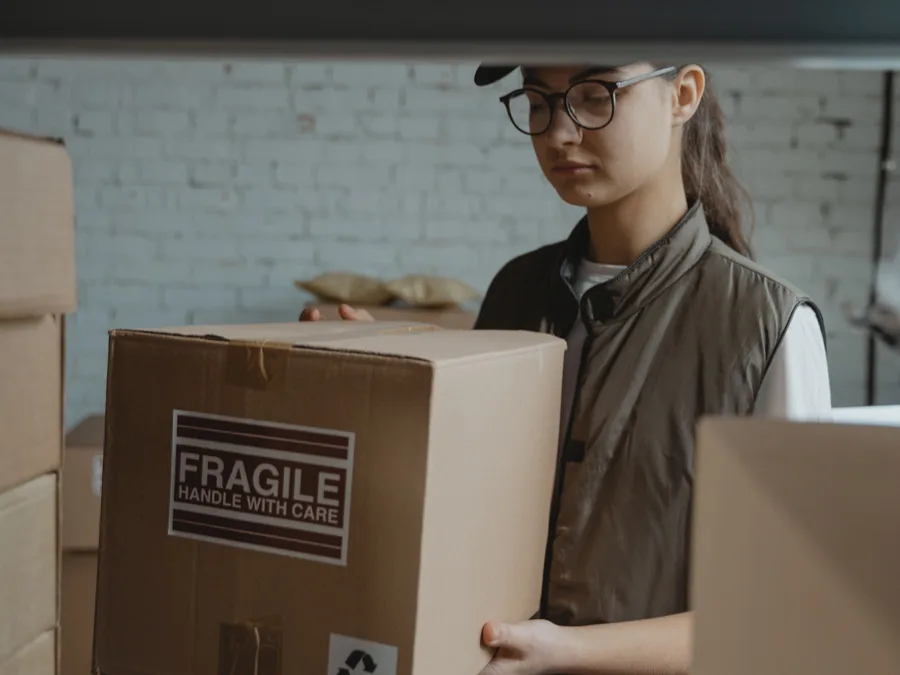
A 3PL is a physical warehouse service. Your inventory ships to the 3PL's warehouse, it is received and put away into storage locations, and when a customer places an order on your Shopify store, the 3PL physically picks the item from its shelf, packs it into appropriate packaging, generates the shipping label, and hands the parcel to a carrier for dispatch. The brand never touches the stock after it arrives at the warehouse.
A 3PL replaces the physical labour of fulfilment. The founder stops packing. The kitchen table or garage stops being a warehouse. Dispatch happens on the 3PL's SLA, not on the founder's schedule. Capacity to scale order volume is determined by the warehouse's operational capacity, not by how many hours the founder can work in a day.
The commercial model is usually event-based: a receiving fee per inbound unit, a storage fee per location per month, a pick and pack fee per order dispatched, and a per-item fee for returns processing. See the full pricing structure at /pricing.
Why the confusion exists
The confusion between Shippit and a 3PL is understandable because both sit between the Shopify order and the delivered parcel. Both generate labels. Both provide tracking. Both reduce operational friction. From the founder's perspective early on, they look like alternative solutions to the same broad problem: 'how do I get orders out the door faster and cheaper?'
The actual difference is what part of the fulfilment chain each one owns. Shippit owns carrier selection and label generation. A 3PL owns inventory receipt, storage, order assembly, packaging, and dispatch handover. At low order volume, carrier and label workflow is often the largest friction, so Shippit delivers the biggest visible improvement. At higher volume, the physical work of picking and packing becomes the bottleneck, and software cannot fix a physical workflow.
A brand doing 15 orders per day can pack orders in under an hour and benefits most from Shippit-style rate optimisation. A brand doing 80 orders per day spends four to five hours per day on physical work, and Shippit cannot compress that. The decision point between the two tools is usually somewhere around 30 to 50 orders per day, which is the structural breaking point of self-fulfilment.
When Shippit is the right tool
Shippit is the right tool for brands in two situations. The first is early-stage Shopify brands doing under 30 orders per day where self-fulfilment is still economically and practically viable. At that volume, the founder or a part-time helper can physically pack orders in a couple of hours, and Shippit's main value is compressing the carrier admin and rate arbitrage on top of that. Pairing Shippit with self-fulfilment extends the runway before a 3PL transition becomes necessary.
The second situation is established brands who already have an in-house warehouse operation (or are with a 3PL that does not include carrier software) and need rate optimisation, label consolidation, and branded tracking across multiple carriers. In that case, Shippit is a bolt-on to an existing physical workflow and solves the software layer without replacing the warehouse layer.
In both scenarios, Shippit augments a fulfilment model. It does not replace one. If the physical packing work is the constraint, adding Shippit does not make the packing faster.
When a 3PL is the right tool
A 3PL is the right tool when the physical work of fulfilment is the constraint. The signals are concrete: the founder is packing orders for more than two hours per day, dispatch accuracy is slipping below 99%, volume has reached or is growing past 30 orders per day, and the work is blocking other parts of the business (product development, marketing, customer service). At that point, no software layer solves the problem. The workflow itself needs to move out of the founder's hands and into a warehouse.
Many 3PLs include rate comparison, multi-carrier dispatch, and tracking workflow as part of the core service, which means a 3PL transition often absorbs the functionality that Shippit would otherwise provide. Cryologix dispatches through Australia Post and selects the most cost-effective carrier per consignment based on destination zone, weight, and dimensions. The carrier optimisation happens inside the 3PL rather than at a separate software layer.
For brands considering the transition, see the true cost of self-fulfilment for a cost comparison model, and 3PL Sydney for the operational specifics of a Sydney-based 3PL. If you are ready to see a cost breakdown for your order profile, the instant quote tool maps your volume onto event-based pricing.
Questions to ask
- Founder is still physically packing orders each day
- Time spent picking, packing, and printing labels exceeds 2 hours per day
- Dispatch accuracy is slipping below 99%
- Order volume has reached 30+ per day and growing
- Shopify shipping costs vary unpredictably versus what Shippit is showing
Want to see how this would run for your brand?
Walk through the warehouse, the dashboard and your order profile with the team that runs it.